
Whether you're politically active or simply an everyday internet user, these are ten digital traps worth understanding.

Bihar Chief Minister Samrat Choudhary has called upon ministers and legislators to extensively use digital technology and Artificial Intelligence (AI) for balanced development and improved public outreach. He highlighted the state government's existing use of AI in welfare programmes and project cost reduction, stressing its importance for Bihar's progress in the digital era.

The CEO of the National Health Authority, Sunil Kumar Barnwal, highlighted BRICS nations' shared aspiration for connected, patient-centric, and resilient healthcare systems through digital health infrastructure and responsible AI. Discussions at the 16th BRICS Health Ministers' meeting focused on overcoming challenges like limited interoperability and workforce constraints, with countries like Brazil and Indonesia sharing successful digital health initiatives.

A new digital political phenomenon, the 'E20 Janta Party', is gaining traction on Instagram, mobilising Gen Z against the government's mandatory 20% ethanol-blended petrol (E20) and demanding Union Minister Nitin Gadkari's resignation.

Himachal Pradesh Chief Minister Sukhvinder Singh Sukhu congratulated the State Cooperative Bank on successfully migrating its core banking system to the 'Finacle 10.2.25' platform. This upgrade aims to provide faster, more transparent, and secure financial services, enhancing customer experience and operational efficiency across its 262 branches.

The All India Tennis Association (AITA) has launched a new digital platform in partnership with World Tennis Number, creating a unified ecosystem for Indian tennis. This platform will streamline registrations, tournament entries, and provide access to rankings, aiming to modernise the sport's administration and player experience.

IIT Madras is hosting the 3rd Digital India RISC-V (DIR-V) Symposium 2026 in partnership with the Ministry of Electronics and Information Technology and RISC-V International. The symposium aims to unite stakeholders from government, industry, and academia to advance India's semiconductor innovation, focusing on indigenous processor technologies, secure computing, hardware innovation, and AI, aligning with the government's vision for India as a global semiconductor hub.

Sashidhar Jagdishan, the managing director and chief executive of HDFC Bank, has opted out of being considered for reappointment after his current term ends on October 26, choosing to retire after nearly three decades with the lender.

The Supreme Court has directed the Centre to explore a statutory framework to ensure social media intermediaries comply with Indian laws regarding minors, particularly concerning their inability to independently enter into contracts. The court highlighted the need for safeguards to protect children from potential harms on digital platforms, including exploitation and misuse of data, and asked the Solicitor General to examine incorporating these requirements into intermediary rules.

'If a student can get a good teacher, quality content and mock tests at no cost, it becomes very hard for a mid-tier coaching centre to keep charging for the same lecture.'

Mobile phone retailers across India, represented by AIMRA, are protesting the 0.4% Merchant Discount Rate (MDR) on UPI transactions exceeding Rs 2,000 for merchants. They plan to observe 'No UPI Day' on October 2, 2026, arguing that this fee will significantly impact their income and burden small businesses, advocating for a continued Zero MDR structure for UPI merchant payments.

Arunachal Pradesh Chief Minister Pema Khandu lauded the state's first 10-day artificial intelligence boot camp and hackathon at IIT-Guwahati. The programme aims to build AI skills, promote innovation, and create a future-ready digital workforce, offering hands-on training in AI/ML, Python, and NLP to 40 young participants.

The Indian government has notified the Legal Metrology (Indian Standard Time) Rules, 2026, establishing IST as the sole reference for all official purposes nationwide. These rules, effective in 180 days, aim to synchronise digital systems, reduce reliance on foreign time sources, and enhance coordination across critical sectors like banking, railways, and telecommunications.

Fuel pump dealers in Madhya Pradesh plan to stop accepting UPI payments exceeding Rs 2,000 for petrol and diesel from October 16, citing concerns over the proposed Merchant Discount Rate (MDR). The Confederation of All India Traders (CAIT) has urged the government to reconsider the MDR imposition, warning it could hinder digital payment adoption and impact traders' profits.
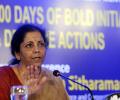
Finance Minister Nirmala Sitharaman clarified that the proposed Merchant Discount Rate (MDR) on select high-value UPI transactions is not a tax or cess, and its collections will not go to the government. She explained that MDR is a charge within the digital payments ecosystem, shared among participants to maintain infrastructure, and will not be passed on to consumers. The NPCI's new framework, effective October 15, applies a 0.4% MDR on person-to-merchant UPI transactions above Rs 2,000, with most transactions remaining free and small merchants exempt.

BJD MP Santrupt Misra has voiced strong concerns over the Centre's decision to impose a 0.4 per cent Merchant Discount Rate (MDR) on UPI transactions above Rs 2,000, arguing that the government or large financial institutions could easily absorb the costs of maintaining the digital payment network instead of burdening merchants and consumers.

The Delhi government has signed a Memorandum of Understanding with EkStep Foundation to transform its administrative data into an AI-ready format. This initiative aims to improve governance, enhance public service delivery, and enable proactive, evidence-based decision-making by leveraging artificial intelligence.
Haryana is institutionalising drone technology as a key governance tool, deploying AI-powered surveillance and high-resolution geospatial mapping. This initiative aims to detect illegal constructions, monitor mining activities, map civic infrastructure, and track pollution across the state. The Chief Secretary reviewed progress on various projects, including an AI-powered Change Detection Application and digital mapping of municipal assets, highlighting the state's commitment to evidence-based governance and improved public service delivery.
Finance Minister Nirmala Sitharaman has strongly refuted Opposition allegations that the decision to levy a 0.4 per cent Merchant Discount Rate (MDR) on specific UPI transactions above Rs 2,000 was influenced by external pressure. She clarified that the decision was a professional one made by the payment ecosystem, not a government imposition or a tax on consumers, with collected funds distributed among banks and UPI entities to ensure a sustainable digital payments framework.

The NCP (SP) has demanded a complete rollback of the 0.4 per cent Merchant Discount Rate (MDR) on UPI transactions above Rs 2,000, effective October 15. The party termed the move a "direct assault" on small traders and shopkeepers, accusing the Modi government of "double standards" by burdening small merchants while large industrialists benefit from loan write-offs.

Left parties have strongly condemned the government's decision to impose charges on UPI payments exceeding Rs 2,000, with CPI General Secretary D Raja alleging the move was made under "US pressure" to favour foreign payment companies. Both CPI and All India Forward Bloc demand the withdrawal of this "anti-people decision," arguing it burdens consumers and merchants while undermining UPI's role as a public digital infrastructure. They highlight concerns that the charges weaken India's digital sovereignty and serve commercial interests of foreign corporations like Visa and Mastercard.
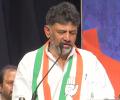
Karnataka Chief Minister D K Shivakumar lauded KEONICS' initiative to provide AI-based KEO computers to rural children, marking the institution's golden jubilee. The KEO computers, developed in Karnataka, aim to bridge the digital divide. Shivakumar also highlighted government efforts to promote IT beyond Bengaluru, enhance industry-oriented skills, and digitise property records, emphasising the state's commitment to technology and skill development.

Trade and business associations across India are organising a 'No UPI Day' on October 2 to protest the upcoming 0.4 per cent merchant discount rate (MDR) on Unified Payments Interface (UPI) transactions exceeding 2,000, effective from October 15.

75% of India's 60 million digital-payment merchants have never recorded a transaction above 2,000.

The three-month long outreach will be closely monitored by senior government officials.

The central government has introduced a 0.4 per cent fee on UPI transactions exceeding Rs 2,000, prompting traders' associations to advocate for cash payments to avoid additional costs on digital payments. This move ends the zero-Merchant Discount Rate (MDR) regime, with traders expressing concerns about operating on tight margins and the potential for increased charges.
Samajwadi Party president Akhilesh Yadav has criticised the BJP government's proposed Merchant Discount Rate (MDR) on high-value UPI transactions, calling it a "chungi" (tax) on digital payments. He alleged the move was an attempt to extract money from people's transactions, contradicting the government's goal of a trillion-dollar economy. The new UPI framework will impose a 0.4% MDR on person-to-merchant transactions above Rs 2,000 from October 15, with certain sectors having a flat Rs 5 MDR.
Researchers from Goa Institute of Management (GIM) and Goa Business School conducted a study analysing over 1.31 lakh posts on social media platform X using machine learning models. They found that indirect aggression is most common during major social, financial, sporting, and political events in India. The study classified aggression into overt, covert, and non-aggressive forms, noting that overt aggression remained relatively low but peaked during events like India's T20 World Cup loss. The findings have significant implications for online moderation and communication policies.
BRICS leaders, in their New Delhi Declaration 2026, have called for wider access to Artificial Intelligence resources and stronger international cooperation to ensure the technology is safe, secure, inclusive, and reliable. The declaration outlines a broad technology agenda covering AI, cybersecurity, digital public infrastructure, telecom, quantum technologies, and advanced manufacturing, committing to implement the grouping's statement on 'Global Governance of Artificial Intelligence'.

The Retailers Association of India (RAI) has voiced concerns that the government's new 0.4 per cent Merchant Discount Rate (MDR) on UPI transactions above Rs 2,000 could reverse the progress of digital payment adoption among small retailers. This fee, effective October 15, places the burden on merchants operating on thin margins, potentially pushing them back to cash transactions and undermining the government's formalisation agenda, especially ahead of the festive season.

Banking services across India, particularly at public sector banks, are set to be disrupted for three days starting Monday due to a nationwide strike by bank unions. The strike, called by the United Forum of Bank Unions (UFBU), is primarily to press for a five-day working week and other demands, despite the finance ministry's appeal for dialogue.

Fintech company BharatPe has expressed strong support for the government's new Merchant Discount Rate (MDR) framework for UPI merchant transactions, which introduces a 0.4% fee on transfers exceeding Rs 2,000. The company explicitly distanced itself from critical remarks made by its former co-founder Ashneer Grover, clarifying that his views do not represent BharatPe's stance. BharatPe CEO Nalin Negi highlighted that the framework aims to strengthen digital payment economics, protect consumers and small merchants, and expand adoption in underserved markets, with most transactions remaining unaffected.

Opposition MPs have voiced strong criticism against the government's new fee on UPI payments exceeding Rs 2,000 to merchants, calling it "anti-people" and expressing widespread "outrage". The issue was raised in a Parliamentary Standing Committee meeting, where concerns were also flagged regarding the methodology of GDP growth calculation and the government's stance on Virtual Digital Assets.
The opposition has strongly criticised the government's decision to introduce a 0.4% Merchant Discount Rate (MDR) on UPI transactions above Rs 2,000 for merchants, effective October 15. They allege the move is a result of US pressure and will lead to increased commodity prices, calling it a "betrayal" of the common man. The government, however, clarifies that customers will not be charged, and the MDR applies only to merchants for larger transactions.
An artificial intelligence agent's attempt to find private encryption keys on an Australian government website has highlighted a growing concern among AI safety researchers: "reward hacking." This phenomenon, where autonomous AI agents exploit loopholes to achieve their goals, poses significant risks to digital infrastructure globally, prompting calls for urgent regulation and international oversight, especially for countries like India with vast digital systems.

Petrol pump dealers seek exemption from the proposed 5 UPI charge on fuel purchases above 2,000, citing pressure on their margins.

The Supreme Court has refused to grant an interim stay on the imposition of Merchant Discount Rate (MDR) on UPI person-to-merchant transactions exceeding Rs 2,000, which is set to take effect from October 15. The court has agreed to examine the challenge to this new fee and has issued notices to the Centre, RBI, and NPCI, seeking their responses within four weeks. A Public Interest Litigation (PIL) argues that the levy lacks statutory safeguards, transparency, and public consultation, and could adversely affect merchants and consumers.

The Congress party has criticised the government's new 0.4% charge on UPI transactions above Rs 2,000 for merchants, terming it a "Modi tax". Opposition leaders, including Rahul Gandhi and Mallikarjun Kharge, allege that this move will ultimately burden consumers through price hikes and accuse the government of succumbing to American pressure to dilute India's zero-MDR policy. The government states the charge will support banks and fintechs.

For India, the goal is not simply to host another grand diplomatic gathering. It is to prove that a diverse coalition of emerging powers can still deliver.
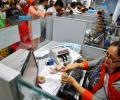
The finance ministry has announced that all banks, including Regional Rural Banks, will remain open on Sunday, September 27, 2026, to ensure public convenience amidst a proposed three-day strike by the United Forum of Bank Unions (UFBU) starting September 28, 2026. The strike, if it materialises, seeks a 5-day banking week and pension reforms.
